How It Works
From two drums of chemical to one seamless roof — the process, the chemistry, and the numbers behind it.
Ask About Your RoofThe Chemistry, in Plain Terms
Polyurea is a two-part material. The parts are stable and inert while they sit in separate drums. They only become a roof when they meet.
A proportioning machine pushes both sides down a heated hose at around 2,000 PSI and 160°F. They collide inside the gun tip, mix by sheer force of impact, and begin reacting instantly. By the time the material lands on the roof it is already turning from liquid to solid — gel in 3 to 6 seconds, tack-free in 10 to 30.
That speed is not a gimmick. It is the reason this material works outdoors. A conventional coating stays wet for hours, during which dew, dust, temperature drops, and a surprise shower can all ruin the film. Polyurea is past the vulnerable stage before any of that can reach it, and unlike most roof coatings it is not moisture-sensitive during cure at all.
It is also 100% solids, meaning there is no solvent or water to evaporate. Nothing shrinks. If the applicator sprays 50 mils wet, you own 50 mils dry. Compare that with a coating that is half water by volume, where half of what you paid for leaves as vapor and the film pulls away from edges and details as it does.
OR-80SLM Silver Lining Membrane — The Numbers
| Property | Value |
|---|---|
| Type | Pure polyurea, 100% solids |
| Approval | Miami-Dade approved |
| Stretch (elongation) | 300 – 400% |
| Tensile strength | 2,500 – 3,000 PSI |
| Tear strength | 400 – 500 pli |
| Gel time | 3 – 6 seconds |
| Tack-free | 10 – 30 seconds |
| Walk on it | Same day |
| Temperature range in service | −40°F to 250°F |
| Typical residential thickness | 40 – 60 mil |
| Walkway / high-traffic areas | 80 – 100 mil (FJ1) |
| Coverage | 1,604 mil-sq-ft per gallon |
| Primer | 7001 Primer on most substrates |
| Equipment | Plural-component proportioner, heated hose |
Preparation Is the Job
If a liquid roof fails, prep is almost always the reason. The membrane itself has 500+ PSI of adhesive capability; it cannot use any of that if it is bonded to dirt.
Clean. Pressure wash to remove chalk, algae, oxidation, and grime. Degrease anything oily. Let it dry fully — trapped moisture under a membrane becomes a blister the first hot afternoon.
Remove what is loose. Curled edges, blistered coating, flaking asphalt, rusted scale. If a scraper takes it off, it goes.
Repair. Open seams, backed-out fasteners, split boots, soft decking. These get fixed as roofing work, not covered as coating work.
Prime. 7001 Primer on asphalt, single-ply, metal, wood, and concrete. It is quick-setting and it blocks bleed-through from old asphaltic layers.
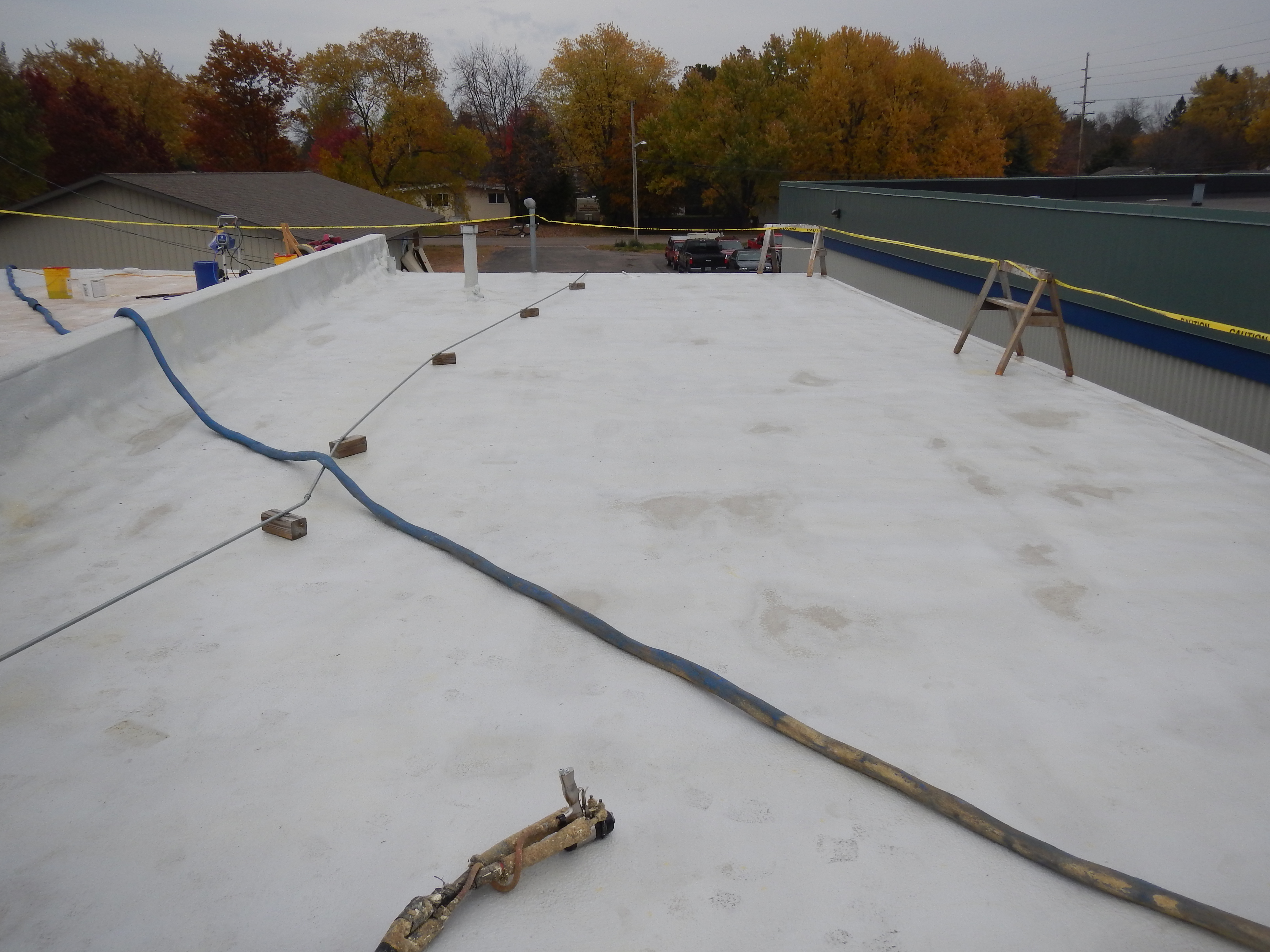
Then spray. Details and penetrations get a stripe pass first, then the field of the roof at full thickness.
The Optional Foam Layer
On flat and low-slope roofs there is a second version of this system worth knowing about. Before the membrane goes down, closed-cell spray polyurethane foam is applied directly to the deck.
The foam does two jobs at once. It insulates — continuously, with no gaps at the joists and no thermal bridging at fasteners. And because it is sprayed, an applicator can build it thicker in the low spots to create slope where the original roof had none, sending water to the drains instead of leaving it standing.
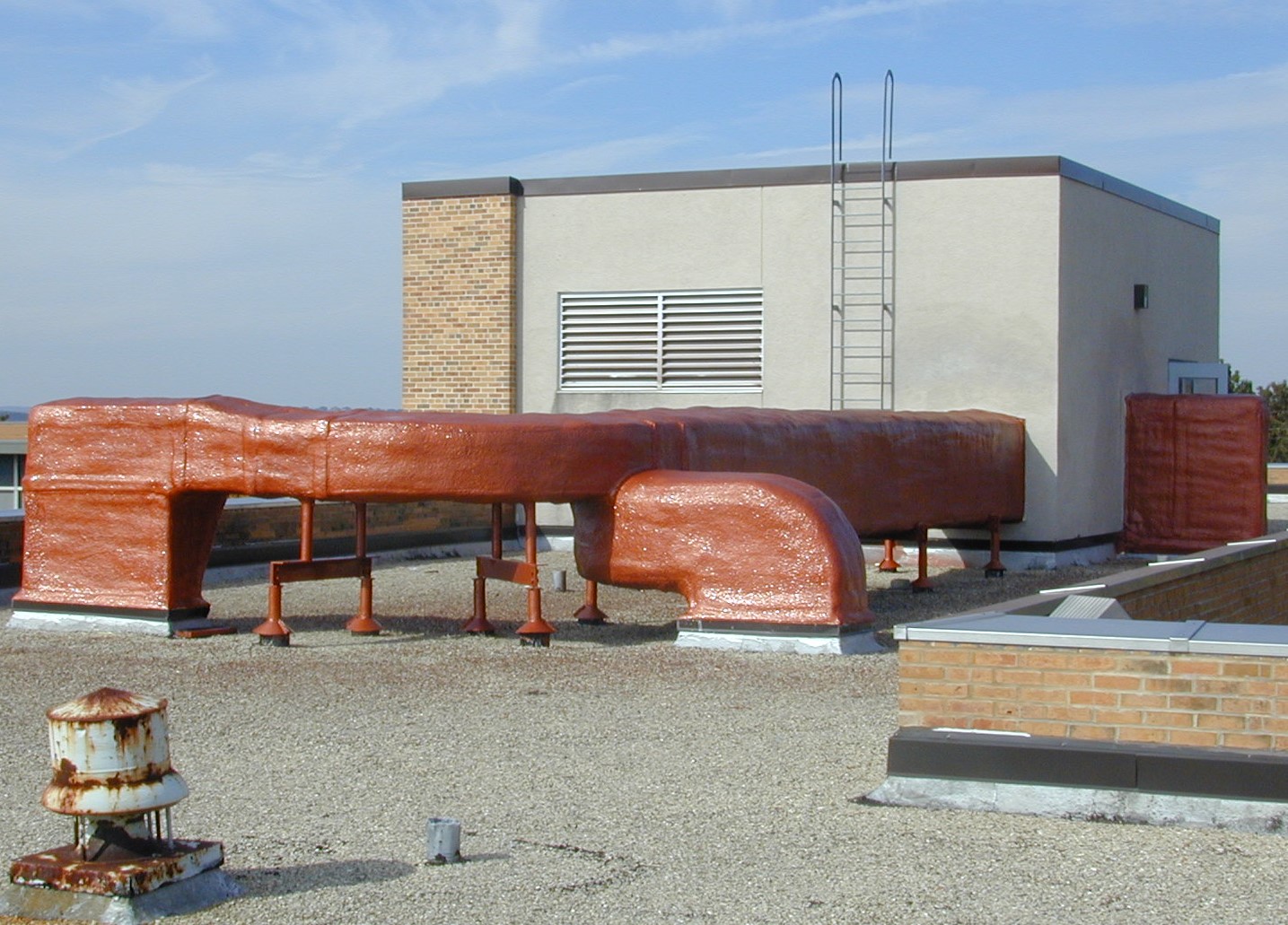
Foam by itself is not a roof. It has no UV resistance and it damages easily. The polyurea membrane over it is what makes the assembly a roof — and that is exactly the combination used on industrial buildings, where a foam-and-polyurea roof is routine rather than exotic.
Want the Technical Data Sheets?
We will send the full TDS and application guide for OR-80SLM, OR7K, and 7001 Primer — useful whether you are hiring a contractor or spraying it yourself.
Request DocumentationSee If Your Roof Is a Candidate
Tell us about your project and we will follow up with product details, technical data sheets, and pricing.